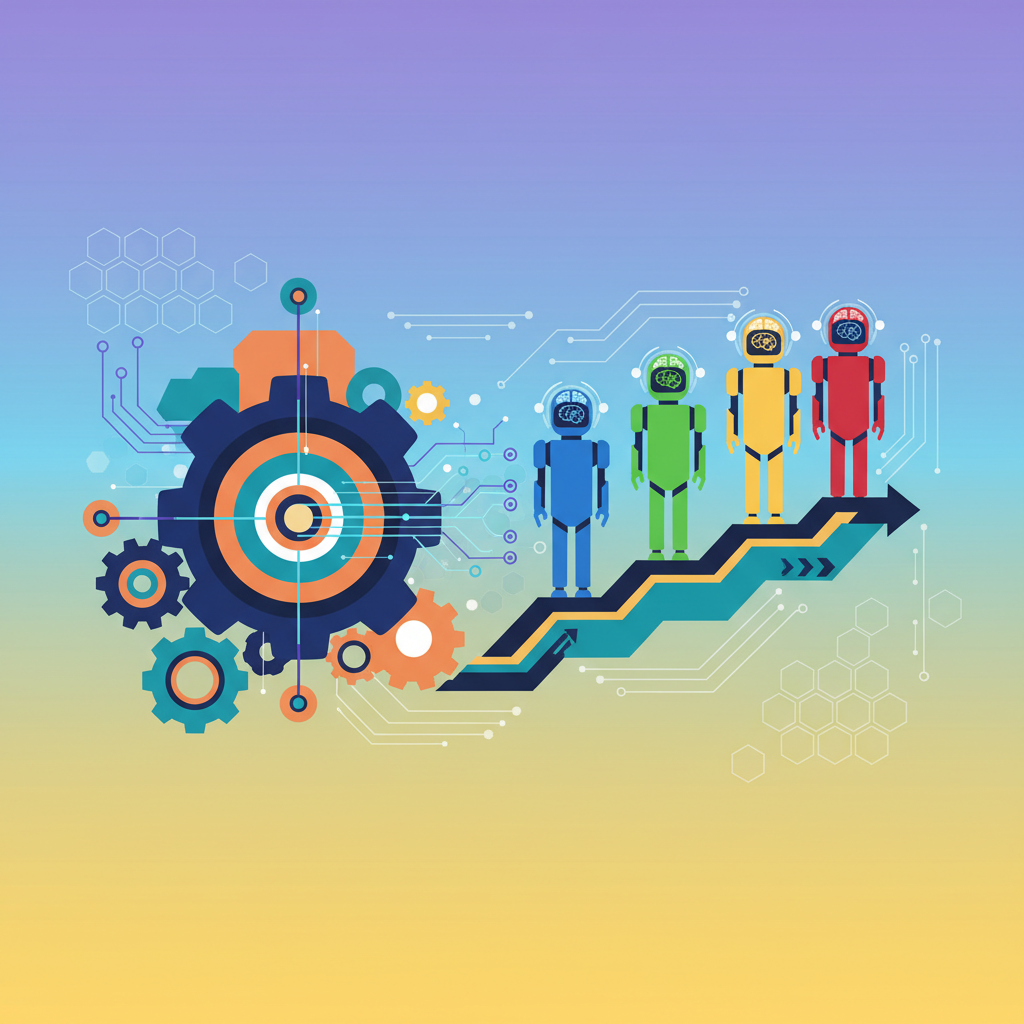
Harness engineering is the discipline of designing systems, constraints, and feedback loops that surround AI agents to ensure reliable performance in real-world production environments.[1][2][3] It separates the AI model's raw intelligence from the infrastructure that manages tools, context, failures, and human oversight, turning experimental demos into robust systems.[1][3]
The Agent = Model + Harness Formula
AI agents consist of two core parts: the language model providing reasoning and the harness handling operational reliability.[3] Without a harness, agents fail unpredictably under real-world variability, such as changing data or multi-step workflows.[1][8] Anthropic's engineering team highlights that for long-running agents, harnesses address session-based memory loss through structured environments, progress tracking, and state management.[1][8]
This approach echoes Martin Fowler's taxonomy: harnesses act as cybernetic governors with guides (feed-forward controls directing behavior) and sensors (feedback validating outputs).[3][4] A well-engineered harness can elevate a mid-tier model beyond a poorly harnessed advanced one.[1]
| Aspect | Traditional Software | Harness Engineering |
|---|---|---|
| Behavior Encoded In | Deterministic code | Guides + model reasoning[3] |
| Failure Detection | Unit tests | Evals + sensor loops[3] |
| Context Source | Hardcoded configs | Live data context layer[3] |
| Update Mechanism | Code deploys | Guide + context updates[3] |
| Human Intervention | Every output | Review gates only[3] |
Core Components of an Agent Harness
Production harnesses integrate five interdependent elements, often grouped into guides and sensors.[1][3]
Guides: Directing Agent Behavior
- Context engineering: Dynamically loads task-specific knowledge to prevent coherence loss, repetition, or stale data use in long workflows.[1] Includes system prompts defining persona, scope, and formats; AGENTS.md files documenting codebase conventions, accessible files, and tools; and constraint files enforcing rules like "never delete production data."[3]
- Architectural constraints: Limit actions to safe boundaries, such as permitted tools or approval requirements.[1]
Sensors and Controls: Validating and Correcting
- Tool orchestration: Sequences tool calls, handles retries, and manages failures.[1]
- Verification loops: Evals, output parsers, and drift detectors validate results before progression; agents with strong verification show 38% better SQL accuracy.[3]
- Human-in-the-loop: Pauses for review on high-stakes actions.[1]
A governed data context layer—with certified, lineage-verified data—is critical, as 27% of failures stem from data quality, not architecture.[3]
Why Harness Engineering Matters in 2026
88% of AI agent projects fail to reach production, often due to unaddressed harness gaps rather than model limits.[3] Harness engineering closes this by enabling scalable deployment in enterprises, from automotive/aerospace systems to DevOps pipelines.[1][7] It supports long-running tasks across sessions, as in Anthropic's frameworks for consistent progress.[8]
Origins trace to Mitchell Hashimoto (2026), Martin Fowler, and OpenAI publications, evolving from prompt engineering to full-system design.[3][4]
The Role of Harness Engineers
This field spawns a specialized career blending software engineering and AI expertise.[2] Daily tasks include:
- Crafting prompts, context configs (e.g., AGENTS.md, CLAUDE.md), and feedback loops.[2]
- Designing APIs, distributed systems for parallel execution, and security boundaries.[2]
- Analyzing logs for failure patterns, enforcing constraints, and placing human checkpoints.[2]
- Iterating via steering loops: Humans (or AI) refine guides/sensors based on repeated issues, using agents for custom tests or linters.[4]
In coding contexts, agents assume roles like Feature Design, Tech Lead, or Build, guided by harness-defined instructions.[6]
Building an Agent Harness: Step-by-Step
- Define guides: Start with system prompts, AGENTS.md for codebase rules, and constraints.[3]
- Implement sensors: Add evals, validators, and drift monitors.[3]
- Engineer data layer: Ensure schema-current, verified data access.[3]
- Add orchestration: Tool sequencing, retries, and human gates.[1]
- Test and steer: Monitor production, iterate on failures.[4][5]
Real-world example: A Strands Agents Framework harness monitors OpenAI changelogs, classifies updates, checks GitHub duplicates, and files issues autonomously.[5] Harness Agents in DevOps execute pipeline tasks without brittle scripts.[7]
Common Pitfalls and Best Practices
- Data failures: Overlooked quality issues cause 27% of breakdowns; prioritize lineage and freshness.[3]
- Context drift: Use dynamic loading over static prompts.[1]
- Over-reliance on models: Structure reduces model dependency.[3]
- Best practice: Future-proof by making harnesses model-agnostic—they improve as models evolve.[5]
Harness engineering transforms AI agents from prototypes to production staples, emphasizing control over raw capability.[1][2][3]
No comments:
Post a Comment