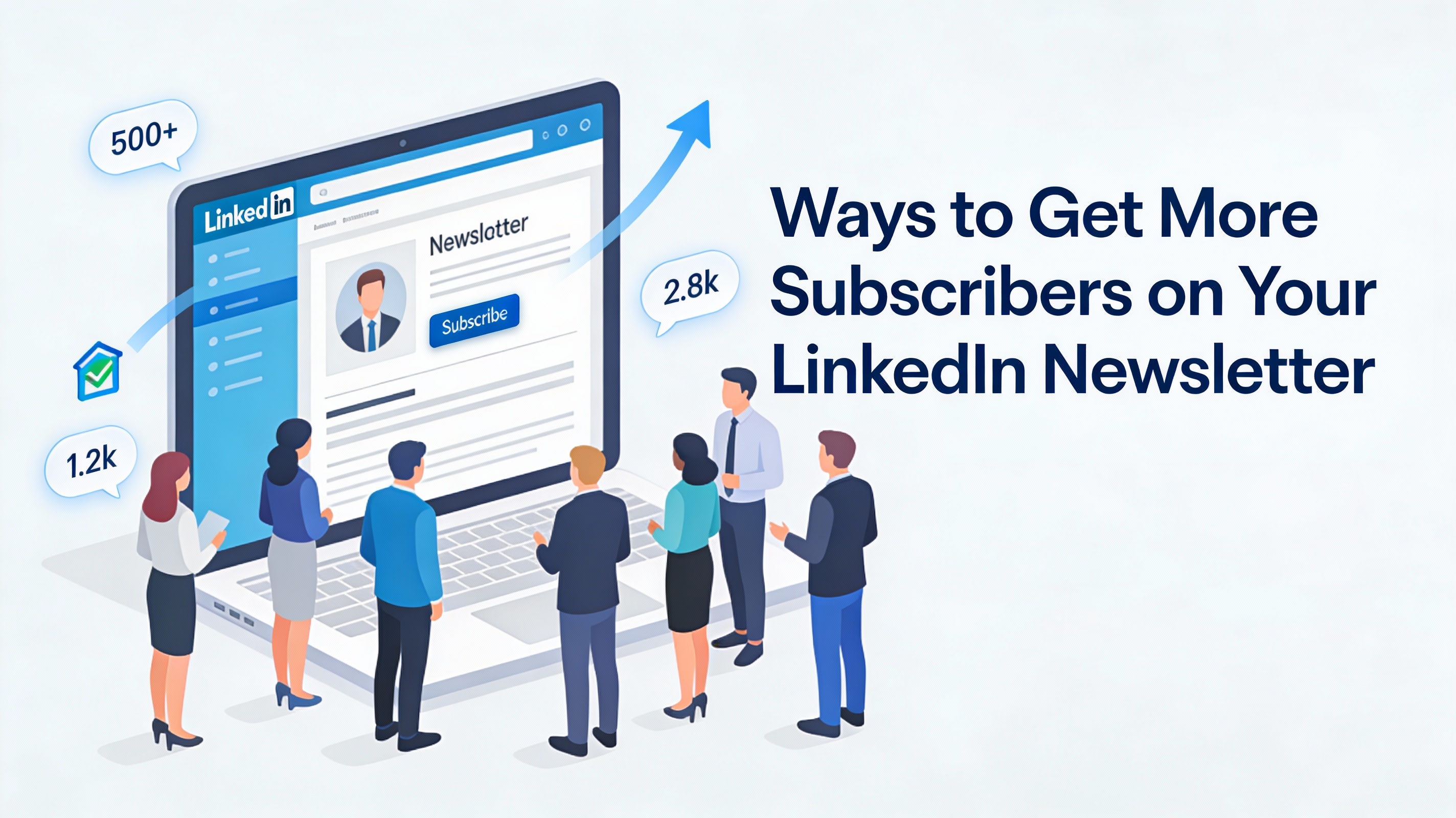
Building a LinkedIn newsletter subscriber base requires a strategic combination of profile optimization, content quality, and proactive promotion. Here are the most effective approaches to accelerate growth in 2026.
Leverage Your Existing Network
Your first subscribers are your most valuable asset. Activate your existing connections ruthlessly by personally messaging your 500+ connections with a specific pitch: "I'm launching a newsletter on [specific topic]. Interested?"[1] Target a 5-10% conversion rate from your network. These warm subscribers are highly engaged and signal quality to LinkedIn's algorithm, dramatically improving your visibility once you reach 50-100 engaged early subscribers.[1]
Optimize Your Profile as a Newsletter Landing Page
Transform your LinkedIn profile into a dedicated newsletter hub.[1] Update your headline to include your newsletter and subscriber count (for example: "Executive Coach | Weekly Newsletter on Leadership Challenges (1,500+ subscribers").[1] Add your newsletter link prominently in your about section and pin a post featuring your newsletter at the top of your profile. This makes newsletter discovery effortless for profile visitors.[1]
Use a Hybrid Platform Strategy
Combine LinkedIn's native newsletter with an external platform like Beehiiv or Substack.[1] LinkedIn provides algorithm benefits and discovery, while external platforms like Beehiiv offer advanced automation and direct email control. For B2B professionals, coaches, recruiters, and SaaS founders, a LinkedIn-first approach makes sense.[1] For writers and consultants, a Substack-native approach with LinkedIn promotion works equally well—choose based on your monetization goals and audience behavior.[1]
Implement Strategic Collaborations
One of the most effective growth systems is the collaboration loop.[1] Identify 10-20 creators in your niche with 3,000-10,000 subscribers slightly ahead of you and propose guest posting exchanges: they write a guest issue for your newsletter (introducing their audience to you), and you do the same for theirs.[1] Each guest post typically brings 50-200 new subscribers from aligned audiences, generating 500-2,000 new subscribers quarterly with minimal effort.[1]
Publish High-Quality, Consistent Content
Provide exclusive or in-depth value that exceeds your regular LinkedIn posts.[2] Choose a specific and valuable niche with a compelling title and description that clearly communicate what subscribers will receive and who the newsletter is for.[2] Maintain a consistent publishing schedule—whether weekly, bi-weekly, or monthly—as consistency builds reader habits and establishes you as a reliable expert.[2] Include deep dives into topics, personal reflections, or detailed analysis unavailable elsewhere on your profile.[2]
Before investing time in content creation, conduct SEO research to identify what people are searching for in your niche.[4] This ensures you're covering topics people actually want to read about.[4]
Actively Promote Each Edition
Publishing is just the beginning. LinkedIn automatically sends a one-time notification to your followers and connections when you launch, providing an initial boost.[2] However, you must continuously promote beyond that initial surge. Share each new edition as a post to your feed, mention it in other content, and feature it on your profile.[2] Promote your newsletter through multiple channels including email and direct client outreach, rather than expecting people to find it organically.[4]
Engage Deliberately to Build Community
Active engagement dramatically improves subscriber retention and loyalty. Reply to every comment on your newsletter posts—this takes approximately 30 minutes weekly but builds genuine connection.[1] End newsletters with specific questions like "What's your biggest hiring challenge?" to encourage discussion.[1]
Feature engaged subscribers in your content through spotlights: "Shout-out to Sarah, who shared her cold email framework in the replies."[1] This transforms subscribers from passive audience members into active participants. Implement milestone recognition by acknowledging subscribers when they reach engagement thresholds (10, 50, or 100 reads) with a simple LinkedIn message.[1]
Segment and Personalize Your Content
By 2026, mass newsletters significantly underperform segmented ones.[1] While LinkedIn's native tools limit segmentation options, you can mentally segment subscribers by engagement level, content preference, and stage (new, active, or inactive).[1] When patterns emerge—for example, 40% of subscribers engage more with "productivity tips" than "business strategy"—adjust your content mix accordingly.[1]
Create exclusive content for highly engaged subscribers, such as early drafts shared in pinned comments.[1] Use A/B testing on subject lines by segment, as different audience segments may respond differently to the same topic.[1]
Re-engage Inactive Subscribers
Track engagement drop-off and intervene before permanent churn occurs.[1] If someone doesn't open for three weeks, send a re-engagement message: "Miss you! Just published a piece on [their interest]. Check it out."[1] This approach wins back 15-20% of inactive subscribers.[1]
Optimize Click-Through Rates
If your newsletter includes calls-to-action, limit yourself to 2-3 strategic links per edition to avoid diluting clicks.[1] Use specific, compelling anchor text instead of generic phrases—replace "read more" with something like "see the 3-step framework."[1] Test link placement, as the middle of the newsletter often outperforms the top or bottom, and double down on content formats that generate the highest click rates.[1]
Test and Iterate
The most successful newsletter creators continuously test different formats and topics.[4] Experiment with single-article formats versus curated approaches that include blogs, case studies, videos, and tips, then stick with the winners.[4] Actively solicit and implement feedback from your community to refine your approach over time.[2]

No comments:
Post a Comment