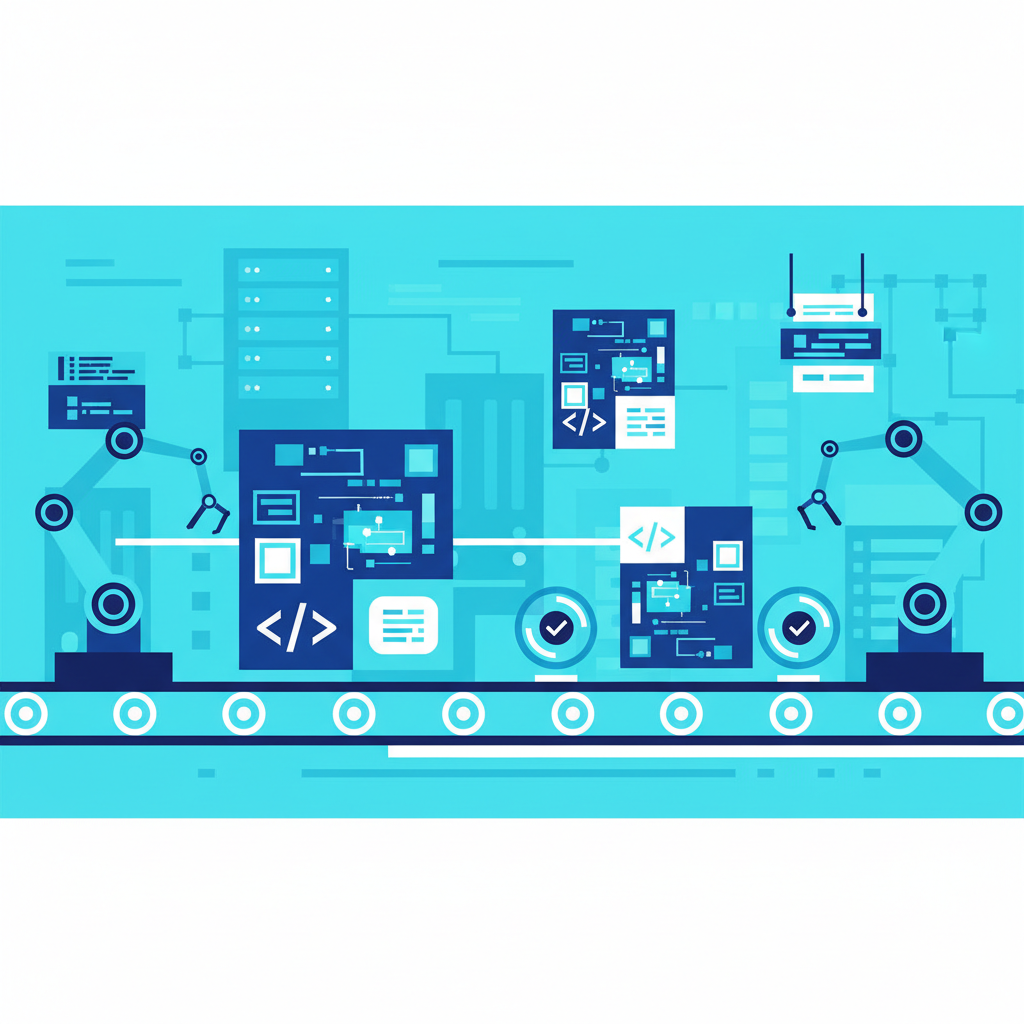
Most engineering teams use Claude Code as an interactive terminal chatbot, sitting over their keyboard waiting for tokens. The asymmetric advantage belongs to those who run it unattended: turning ad-hoc prompts into deterministic routine harnesses that execute while the team sleeps.
Your Bottleneck Is Not Context Window, It Is Session Ephemerality
You do not have an LLM reasoning problem; you have a state persistence problem. When engineers treat Claude Code like an interactive shell, every session starts from scratch and dies when the terminal closes. When HumanLayer paired with Claude Code, they condensed a 7-hour pairing session into 1–2 weeks of normal work (Source: HumanLayer F24 Case Study), showing what deep focus yields. But human-in-the-loop pairing cannot scale infinitely. Today, 115,000+ developers use Claude Code, processing 195 million lines of code weekly across 335,000+ AI-authored PRs in 2025 (Source: Anthropic / Industry Usage Metric). Reaching that tier requires moving from interactive prompts to unattended routine harnesses triggered by webhooks, schedules, and GitHub events.
The Blueprint Anthropic Uses for Autonomous Coding
Anthropic designed Claude Code routines explicitly for unattended, repeatable operations: alert triage, backlog maintenance, bespoke code review, deploy verification, and documentation drift detection (Source: Anthropic Documentation). When teams try to automate these end-to-end in one shot, agents derail. They wander down rabbit holes, touch unrelated files, and exhaust their token budget on hallucinations. Anthropic solves this by decomposing the build into tractable chunks and using structured artifacts to hand off clean context between discrete execution runs (Source: Anthropic Engineering Harness Design). Think of an unharnessed agent like an intern stranded in an infinite library with no map. A routine harness is an assembly line jig: it constrains raw power into repeatable physical tolerances.
The TRAP Framework for Unattended Execution
To build resilient Claude Code harnesses, apply the TRAP Framework: 1. Trigger: Bind execution to a deterministic event like a GitHub dispatch, cron schedule, or CI alert rather than an ad-hoc CLI command. 2. Restrict: Scope the workspace strictly to target diffs, lint configs, or isolated subdirectories to prevent file sprawl. 3. Artifact: Mandate that each session produces a machine-readable summary (JSON schema or Markdown checklist) before exiting. 4. Pass-off: Ingest the prior artifact into the next scheduled phase instead of passing raw terminal history. This modular structure ensures failures isolate within a single phase rather than poisoning your entire repository state.

What Happened When a Production RAG Build Used Test Fixtures
Consider the FutureProofing production RAG build. Instead of letting Claude Code write code unassisted, the team constrained it with an eval harness and strict test fixtures. The entire production system shipped in 11 days (Source: Production RAG Case Study FutureProofing). Under that build, the eval harness and test fixture line item alone generated 9 PRs with 145 average lines added and achieved 78% AI-assist (Source: Production RAG Case Study FutureProofing). The harness acted as a rigid guardrail: Claude Code was not allowed to claim completion until the deterministic test runner verified the output. By keeping PR sizes small and verified by external scripts, the team eliminated human review bottlenecks.
Building Your First 3-Step Maintenance Routine
Setting up a routine harness requires three concrete steps in your CI pipeline. Step 1: Define the target scope. Run a bash wrapper that isolates target directories—for instance, checking for documentation drift against recent commit diffs. Step 2: Execute non-interactively. Invoke Claude Code via CLI flags that pass your task prompt alongside strict system constraints and a mandatory output artifact path (--output-artifact summary.json). Step 3: Validate and commit. Add a post-execution assertion script. If the artifact passes schema validation and unit tests clear, push a PR. If it fails, fail the CI job without merging. This mirrors how Zapier scaled to 800+ internal Claude agents and achieved 10x year-over-year growth (Source: Zapier Case Study).
From Prompt Jockey to Systems Architect
Today, 1 in 7 PRs (14.9%) already feature AI participation (Source: Industry Usage Metric). The engineers pulling ahead are not the ones typing prompts faster into their terminal. They are the systems architects who build self-healing development pipelines. When you wrap Claude Code in automated harnesses, you transition from micromanaging syntax generation to orchestrating autonomous software maintenance. You stop trading your hours for diffs and start deploying resilient machines that preserve your codebase while you focus on genuine architectural breakthroughs.
Sources: Anthropic Claude Code Documentation (Routines and Repeatable Ops) | Anthropic Engineering Write-Up (Harness Design for Autonomous Coding) | FutureProofing Production RAG Case Study | HumanLayer F24 Case Study | Anthropic / Industry AI Usage Metrics 2025 | Zapier Internal Claude Agent Case Study
No comments:
Post a Comment