Most teams attempt to build powerful AI agents by flooding context windows with every tool, system prompt, and API capability available, only to watch context costs skyrocket and accuracy collapse. The secret to production-grade agents isn't a smarter model, but a strict separation of skills and progressive hooks that only execute on demand.
Your Agent Bottleneck Is Context Bloat, Not Model Reasoning
When agents fail or hallucinate, developers typically blame the LLM under the hood. However, the true failure point is usually cognitive overload caused by feeding too many tool definitions into the initial prompt. This practice degrades model reasoning. To fix this, we must reframe the problem. An agent should operate like a human specialist, having access to an entire library of tools without keeping every single manual open on their desk simultaneously. This is where orchestrating skills through dynamic hooks becomes a necessity. By shifting from a static prompt structure to an on-demand loading pipeline, we drastically cut down noise and focus the model on execution. This approach transitions your system from a fragile construct into a robust, deterministic workflow.
The Five-Tier Harness: Architecture Rules for Skills and Hooks
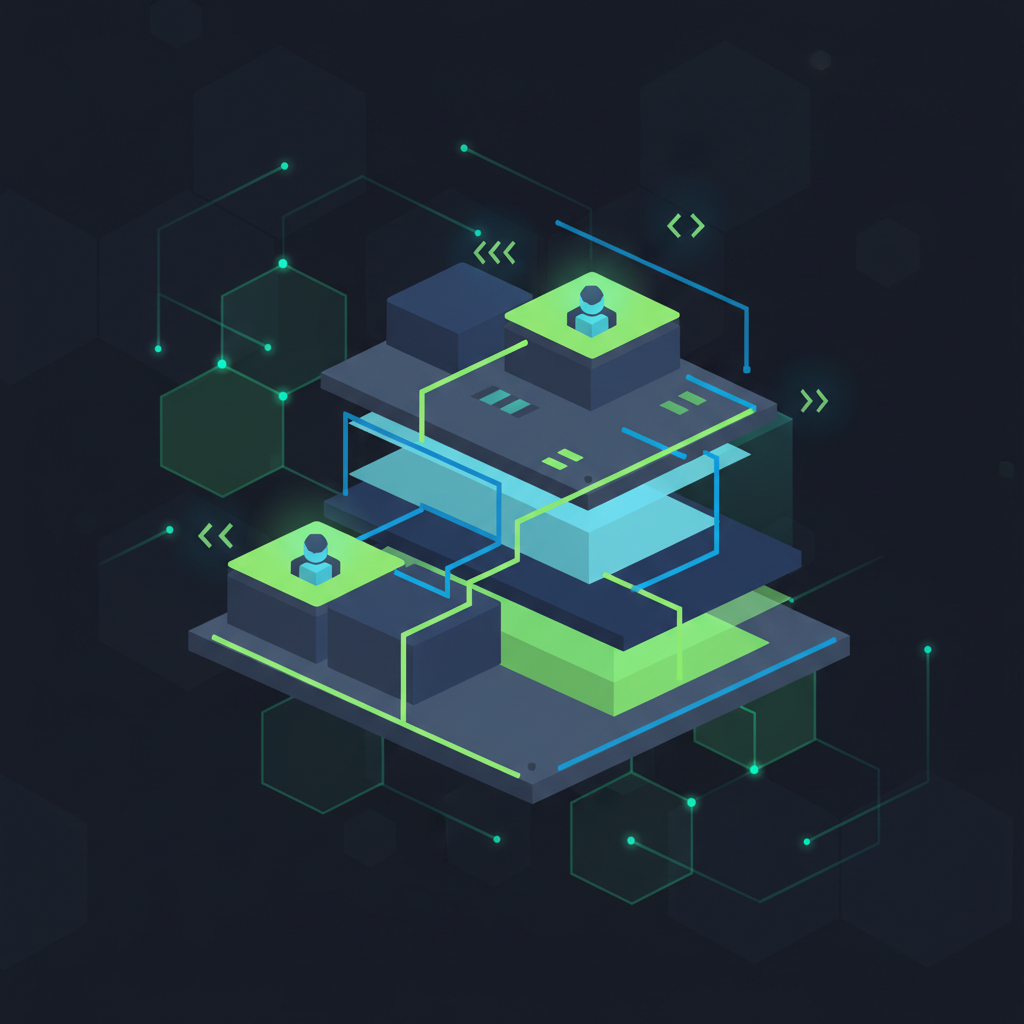
To build a resilient agent, you must implement a structured, layered orchestration model. We can organize this using the LOHS Pattern (Layered Orchestration and Hook System). In this framework, hooks feed dispatchers, dispatchers feed skills, skills feed agents, and agents feed workflows (Source: Agent architecture / development harness pattern). This architecture enforces constraints and ensures memory persistence across user sessions while facilitating multi-agent deliberation. Instead of letting agents directly execute arbitrary code, every action must pass through this five-tier harness. This structure ensures that raw inputs are validated, routing logic is locked down, and executing tools remain completely decoupled from the parent agent until they are explicitly invoked. This division of labor keeps the execution predictable and clean.

Progressive Disclosure and the Power of Curated Agent Skills
The core implementation mechanism relies on progressive disclosure. This pattern ensures that only a skill's name and description remain in the active context, loading the full execution payload only when the agent decides to trigger that specific skill. Adopting this pattern saves thousands of tokens per conversation (Source: Claude skills workflow pattern). Curating your agent skills pays immediate performance dividends. According to the SkillsBench benchmark, curated agent skills increased task success by 16.2% on average across 84 tasks (Source: SkillsBench benchmark). The performance gains, however, are highly domain-dependent. Software engineering tasks saw an increase of 4.5%, while healthcare tasks experienced an impressive jump of nearly 52% (Source: SkillsBench benchmark). This data proves that smaller models using highly curated, progressive skills can match or outperform larger models that lack systematic skill management.
The Three Quality Gates for Trustworthy Agent Output
To safely deploy this orchestration protocol, you must integrate concrete security and quality control gates. The Code Agent Orchestra workflow outlines three essential pillars: plan approval, hooks, and AGENTS.md (Source: Code Agent Orchestra workflow). Under this paradigm, agents are confined to scoped tasks, while humans retain control over software architecture and final reviews. Hooks act as runtime validation checkpoints. For instance, in a real-world enterprise deployment, you might configure specialized worker agents for a 4-step loan origination chain or a KYC onboarding chain (Source: Industry orchestration examples in banking). To prevent runaway financial risk, these agents operate under a hard $5M threshold that triggers mandatory human approval hooks for high-value underwriting (Source: Industry orchestration examples in banking). This design keeps your automation swift while placing deterministic guards where they matter most.
The Supply Chain Threat: Dynamic Sandboxing and Trust-Tiered Execution
Orchestrating agent skills without ironclad runtime security is an invitation to disaster. The risks are not theoretical. In a multi-agent security study focusing on ClawHavoc, researchers identified that nearly 1,200 malicious skills successfully infiltrated a major agent marketplace (Source: Multi-agent security case study (ClawHavoc)). These compromised skills exfiltrated highly sensitive resources, including API keys, cryptocurrency wallets, and browser credentials at scale (Source: Multi-agent security case study (ClawHavoc)). The root cause is a lack of supply-chain validation. To safeguard your system, you must implement trust-tiered execution. This means running third-party skills inside isolated, ephemeral scratchpads or sandboxes, utilizing pre-execution hooks to inspect outgoing payloads, scan for sensitive patterns, and block unauthorized network requests before the execution phase begins.
Elevating Orchestration to Build Resilient Autonomous Ecosystems
The ultimately successful team is not the one with the largest context window, but the one that masterfully handles constraints. Think of your orchestration layer as an air-traffic control tower. By utilizing progressive disclosure, strict validation hooks, and human-in-the-loop escalation thresholds, you build an agentic system that is secure, fast, and intensely focused. Consider a real-world analytics setup that, after only five iterations, utilized these exact principles to run a complex YouTube report generation workflow across eight data sources in about 10 minutes (Source: Claude skills workflow pattern). Moving forward, design your systems with these boundaries. When you respect the limits of cognitive load, your agents cease to be fickle toys and instead become reliable, enterprise-ready digital colleagues.
Sources: SkillsBench benchmark | Claude skills workflow pattern | Multi-agent security case study (ClawHavoc) | Agent architecture / development harness pattern | Code Agent Orchestra workflow | Industry orchestration examples in banking
No comments:
Post a Comment